
Preparing for the GRE can feel overwhelming, especially when it comes to memorizing a vast vocabulary.
But what if we told you there’s a smarter way to learn?
A strong vocabulary is essential for acing the GRE Verbal section, as it helps you tackle sentence equivalence, text completion, and reading comprehension with ease.
In this blog, we’ll explore why GRE vocabulary matters, how many questions you can expect, and the best ways to master the top 100 GRE words. All without the stress of cramming!
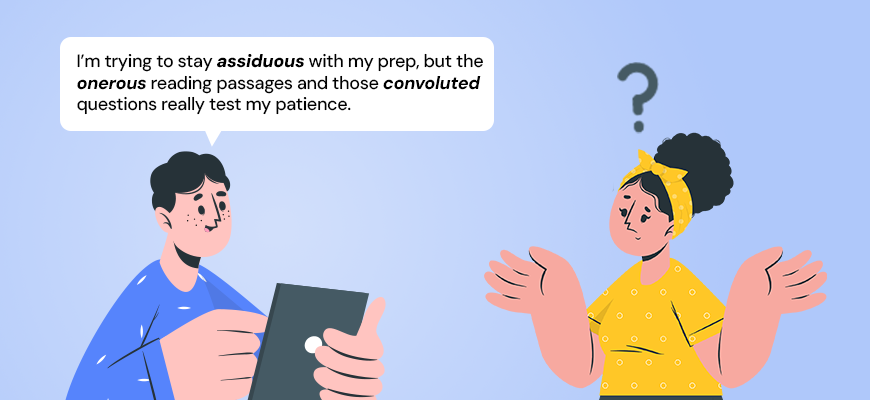
In the GRE Verbal section, words aren’t just words- they’re your ticket to a top score!
A strong vocabulary helps you tackle sentence equivalence, text completion, and reading comprehension.
But let’s be real. The GRE isn’t about stuffing your brain with fancy words; it’s about mastering the language game, understanding meanings in different contexts, and picking up subtle hints to choose the perfect fit.
With EverTutor, building your vocabulary isn’t a dull chore. It's a power move!
Instead of relying on rote memorization, EverTutor’s Vocab Path makes learning engaging with its mnemonically magical approach, tailored hints, and repeated exposure to reinforce words naturally. You can explore word usage, connect words to meaningful stories, and reset tricky questions with just the right nudge to deepen understanding.
EverTutor moves beyond rote memorization, tailoring the learning process to your needs and focusing on the words you find challenging. With a structured and stress-free approach, it helps you strengthen your vocabulary and boost your GRE verbal score effectively.
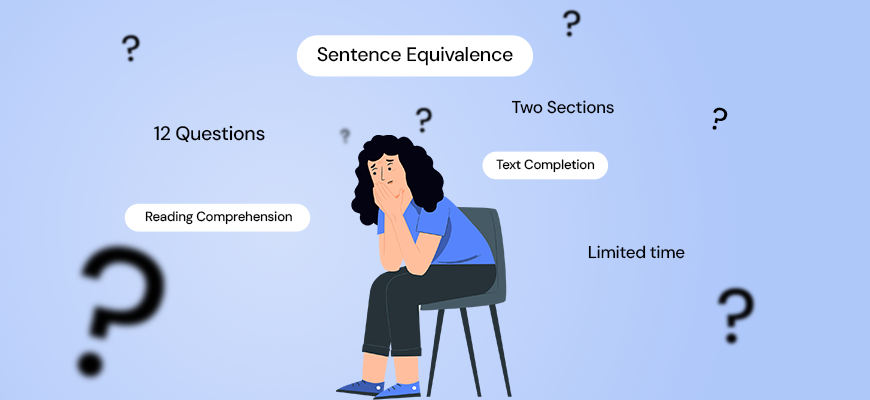
The GRE verbal reasoning section assesses your vocabulary through three key question formats: Sentence Equivalence, Text Completion, and Reading Comprehension.
It consists of 27 questions, split into two sections (12 questions in the first and 15 in the second). You’ll have 18 minutes for the first section and 23 minutes for the second.
Did some words boggled your mind and left you second-guessing in there?
Don’t worry! You’re not alone. The GRE loves to throw in tricky vocabulary, and it’s completely normal to stumble on a few.
But does that mean you need to memorize every single word to score high?
Let us find out!
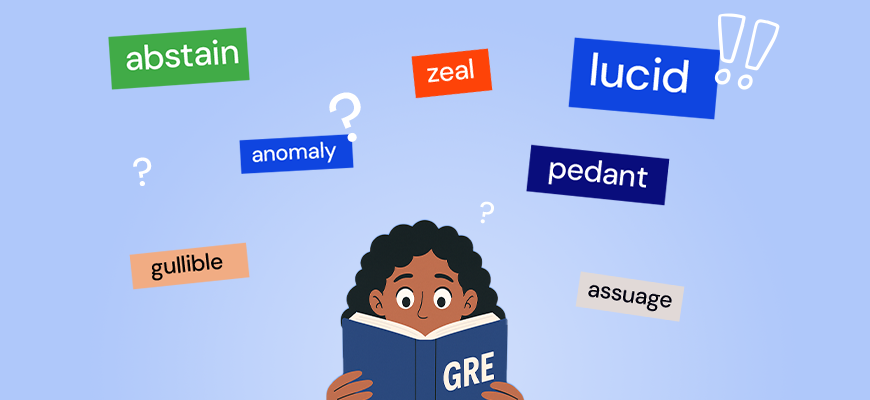
No, you don’t need to memorize every single GRE word to ace the verbal section! There are smarter approaches that make learning vocabulary easier, more effective, and even fun. The key is not just memorization but understanding words in context and reinforcing them through engaging activities. With the right techniques, you can retain words effortlessly and apply them with confidence on test day.
That’s exactly where EverTutor’s Vocab Path saves the day.

1. Personalized AI-Driven Tutoring on High-Frequency Words
EverTutor’s Vocab Path tailors your learning experience by focusing on the most commonly tested GRE words. With AI-driven personalization, you’ll see words in context, making them easier to understand and recall. It even adapts to your progress by revisiting tricky words until you master them like a pro!
2. Revise, Recall & Reinforce for Better Retention
Simply looking at words once isn’t enough! EverTutor’s Vocab Path helps you revise by using mnemonics, taking hints, recalling words, and reviving them in your memory repeatedly for long-term retention. You can check word usage, ask for relevant stories, and even reset and try a question again after taking hints.
3. Optimized Hints & Custom Learning Paths
Not all hints work the same for everyone! EverTutor’s Vocab Path optimizes the type of hints like stories or word usages to help you learn words faster. It also personalizes your learning journey by tracking your performance and adjusting word difficulty accordingly. You can even customize your study plan based on your own assessment of your progress.
4. Practice Tests
On EverTutor, you can strengthen your vocabulary with GRE-style practice tests that mimic the real exam. These structured exercises track your progress, highlight weak areas, and ensure repeated exposure to words, reinforcing learning in a practical way.
5. Smart Word Review & Progress Tracking
On EverTutor, you can sort words by difficulty, group them by category, review recent words, and revisit words you found challenging. This structured review ensures no word is forgotten.
That’s why EverTutor stands as the ultimate power player in GRE vocab prep- blending intelligence, strategy, and engagement to make mastering words effortless.
fit.
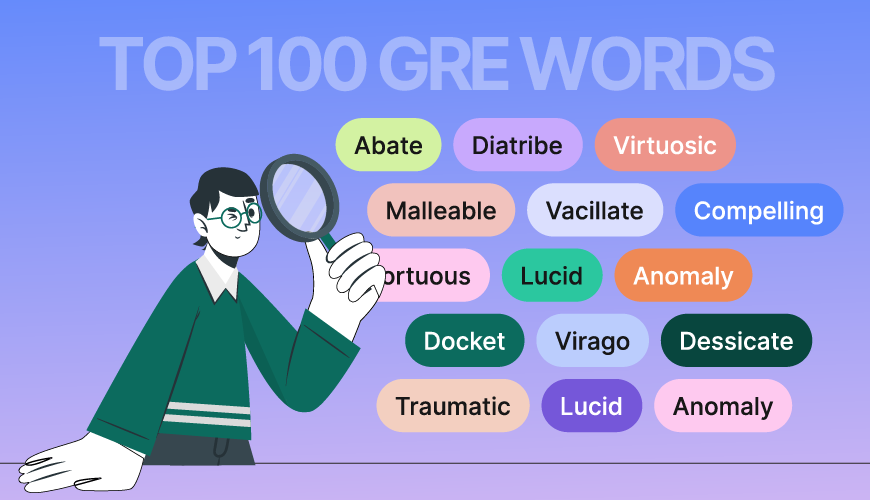
Here’s a list of the Top 100 Most Common and Most Frequently Tested GRE Vocabulary Words, complete with definitions, example usage, and mnemonics to help you understand and retain them effortlessly. These words appear frequently in the GRE verbal section, making them essential for boosting your score and improving your comprehension skills.
Mastering GRE vocabulary doesn’t have to be an overwhelming task. With the right approach, you can turn learning into an engaging and effective experience. By focusing on high-frequency words, using contextual learning, and leveraging AI-driven strategies, you can retain words effortlessly and apply them with confidence on test day.
EverTutor transforms vocabulary prep from rote memorization into a smart, structured, and stress-free journey, ensuring long-term retention and real understanding. So, whether you’re just starting or refining your word list, embrace these strategies and watch your GRE verbal score soar.
Improving your GRE vocabulary requires consistent practice and smart strategies rather than rote memorization. Start by focusing on high-frequency GRE words, as these are most likely to appear on the test. Use mnemonics, word associations, and storytelling techniques to make words easier to remember. Reading editorials, academic articles, and GRE-level texts helps you understand words in context. Finally, take regular vocabulary tests and practice questions to track progress and strengthen recall.
It depends on how you study them. Learning 600 high-frequency GRE words can be a strong foundation, as many commonly tested words appear repeatedly in the exam. However, GRE vocabulary is not just about memorizing words- it’s about understanding their meanings, nuances, and usage in context. Instead of focusing solely on word count, prioritize active learning techniques like mnemonics, practice quizzes, and reading complex texts to reinforce understanding. If you can master 600 essential words thoroughly, along with context-based practice, it can significantly boost your verbal score. However, for a higher score, expanding your vocabulary further is always beneficial.
Memorizing vocabulary can help, but it’s not the most effective way to master GRE words. Simply cramming word lists often leads to forgetting them quickly. Instead, learning words in context, using mnemonics, and reinforcing them through engaging methods like contextual usage, storytelling, and smart hints ensures better retention and application. A smarter approach, like EverTutor’s personalized learning, helps you truly understand and recall words when it matters most!
GRE vocabulary can be challenging because it includes advanced, less commonly used words that test your ability to understand nuance, context, and precise meanings. Unlike everyday vocabulary, many GRE words come from academic, literary, or formal writing, making them harder to recognize if you’re unfamiliar with them. However, the difficulty depends on your preparation. If you rely on rote memorization, it can feel overwhelming. But using mnemonics, word associations, context-based learning, and practice quizzes can make GRE vocabulary much easier to master. With the right approach, even the toughest words can become second nature!
✅ 1000+ Practice Questions with Step -by-Step AI Walkthroughs.
✅ Vocabulary Trainer for the most essential GRE words.
✅ 24/7 Real-Time Doubt Solving with an AI Tutor.
✅ 5 Full-Length GRE Mock Tests with instant AWA scoring.